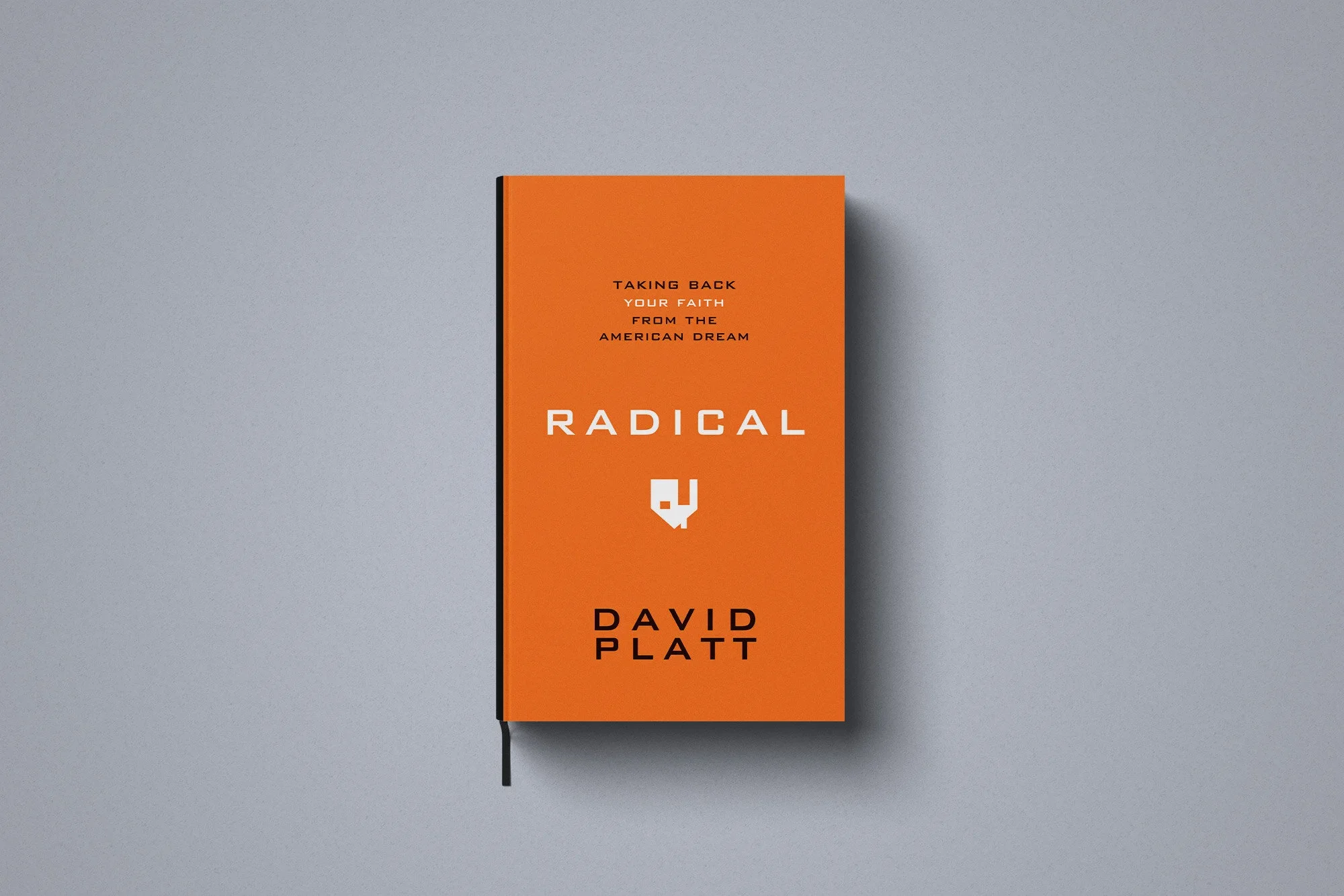
Radical is one of those books you might feel a bit nervous about picking up. The blurb states that author, David Platt “challenges you to consider with an open heart how we have manipulated the gospel to fit our cultural preferences. He shows what Jesus actually said about being his disciple—then invites you to believe and obey what you have heard”. My heart’s already beating a bit faster.
The main premise of this book is that Christians (and he is addressing American Christians in particular) have allowed the gospel to become influenced and even corrupted by the ideals of the great American dream — financial success and security, career and personal happiness. And much as I’d like to think it doesn’t apply to the Australian context, I have a sneaking suspicion that it does. Those goals and ideals — financial security, success and personal happiness and satisfaction — are very close to the Australian heart (and my heart) and therefore the church in Australia is liable to be influenced by them.
And so with a rising sense of discomfort, I begin to read. Initially, I’m a little wary — I’ve seen Christian books with titles like these in the past which have promised to unlock some special new way of relating to God by practising a secret formula that the author has discovered. Like a Christian version of The Secret. My fears on this account are unfounded. Platt spends a large part of his book preaching the gospel. Nothing new and no special revelation hitherto unknown. He spends a lot of time dwelling on our sin, God's consequent wrath, and therefore our desperate need for Jesus. In fact, it appears that by devoting several chapters to what the gospel actually is, he is trying to help us see how earth-changing the implications are. It is the magnitude of God's saving work in Jesus that should lead us to a radical faith in him, “This is why you and I cannot settle for anything less than a God-centred, Christ-exalted, self-denying gospel”.
My other fear, however — that I might be called upon to consider my comfortable life and how I might abandon this to Christ — is well-founded. And once again Platt points us to the Scriptures. For example, in Luke 9 Jesus reminds his would-be followers that they are signing up for a life of sacrifice and hardship, and that even returning to bury the dead or say goodbye to loved ones is not an option. Again and again, he shows his readers that Jesus' call to follow him is not an easy or comfortable one. In fact, it means death — death to self as we take up our cross. He summarises Jesus' call to his disciples this way:
“Ultimately, Jesus was calling them to abandon themselves. They were leaving certainty for uncertainty, safety for danger, self-preservation for self-denunciation. In a world that prizes promoting oneself, they were following a teacher who told them to crucify themselves.”
I think his point is well-made. As much as the gospel is good news, and we should rejoice in forgiveness and eternal life, following Jesus does involve sacrifice, abandonment of self, persecution and hatred. If we deny this, we deny the Lord who saved us.
Here is the danger of distorting the gospel as he puts it:
“We are giving in to the dangerous temptation to take the Jesus of the Bible and twist him into a version of Jesus we are more comfortable with.
“A nice, middle-class, American Jesus. A Jesus who doesn't mind materialism and who would never call us to give away everything we have. A Jesus who would not expect us to forsake our closest relationships so that he received all our affection. A Jesus who is fine with nominal devotion that does not infringe our comforts, because after all, he loves us just the way we are.”
Platt is also deeply passionate about obedience to the great commission. He argues that it is the role of every Christian, one way or another, to make disciples of all nations. Billions of people have never even heard of Jesus, so how can we in the west, which has had the gospel for millennia, ignore the fact that these people are going to hell? We must get involved in some way, both as individuals and churches and this goes hand-in-hand with giving to the poor. Platt deplores the way churches spend millions on their own buildings and resources and yet give comparatively little to the church in the developing world. This may feel a bit close to the bone as we are on the verge of purchasing a building, but I do think it's worth considering. We must not forget our brothers and sisters who face poverty and persecution daily.
In case you think the author is advocating some form of asceticism, he spends considerable time reminding us that although the call to follow Jesus is a hard one, the rewards are great — in this life and in the life to come. Treasure in heaven is what the rich man in Mark 10 has to look forward to if he will follow Jesus’ command. The parable of the hidden treasure also reminds us of this. As Platt says, Jesus is “someone worth losing everything for… For when we abandon the trinkets of this world and respond to the radical invitation of Jesus, we discover the infinite treasure of knowing and experiencing him.”
So what does Platt suggest we do? He focuses on a number of ways we can repent of distorting Jesus and what it means to follow him in a five-part, one year “radical experiment”. Admittedly this is starting to sound like a special formula, but I think they are good, helpful suggestions. Encouragingly, the first two things he exhorts us to do are to pray and spend time in God’s Word, because it is God who saves and God who changes us. He also suggests we give sacrificially to a specific purpose, one that we feel personally connected to. He advises spending some time — maybe 1-2 weeks — in another cultural context preaching the gospel. Finally, he says we really need to commit to being part of one church community and serving there wholeheartedly.
Radical is an uncomfortable read, but I think it is founded on the gospel and it is a rebuke we need to hear — certainly a rebuke I need to hear. So what will I do? I’ll give reading the Bible in a year another crack (so far the longest I’ve managed is about three months). I’ll try praying for other places in the world more — possibly from his suggestion of Mission World or a CMS prayer diary. I’m thinking of ways I can give more generously to something specific that I can be connected to — possibly a Compassion project. I’m still pondering other ways to be radical, so feel free to ask me or make some suggestions.